




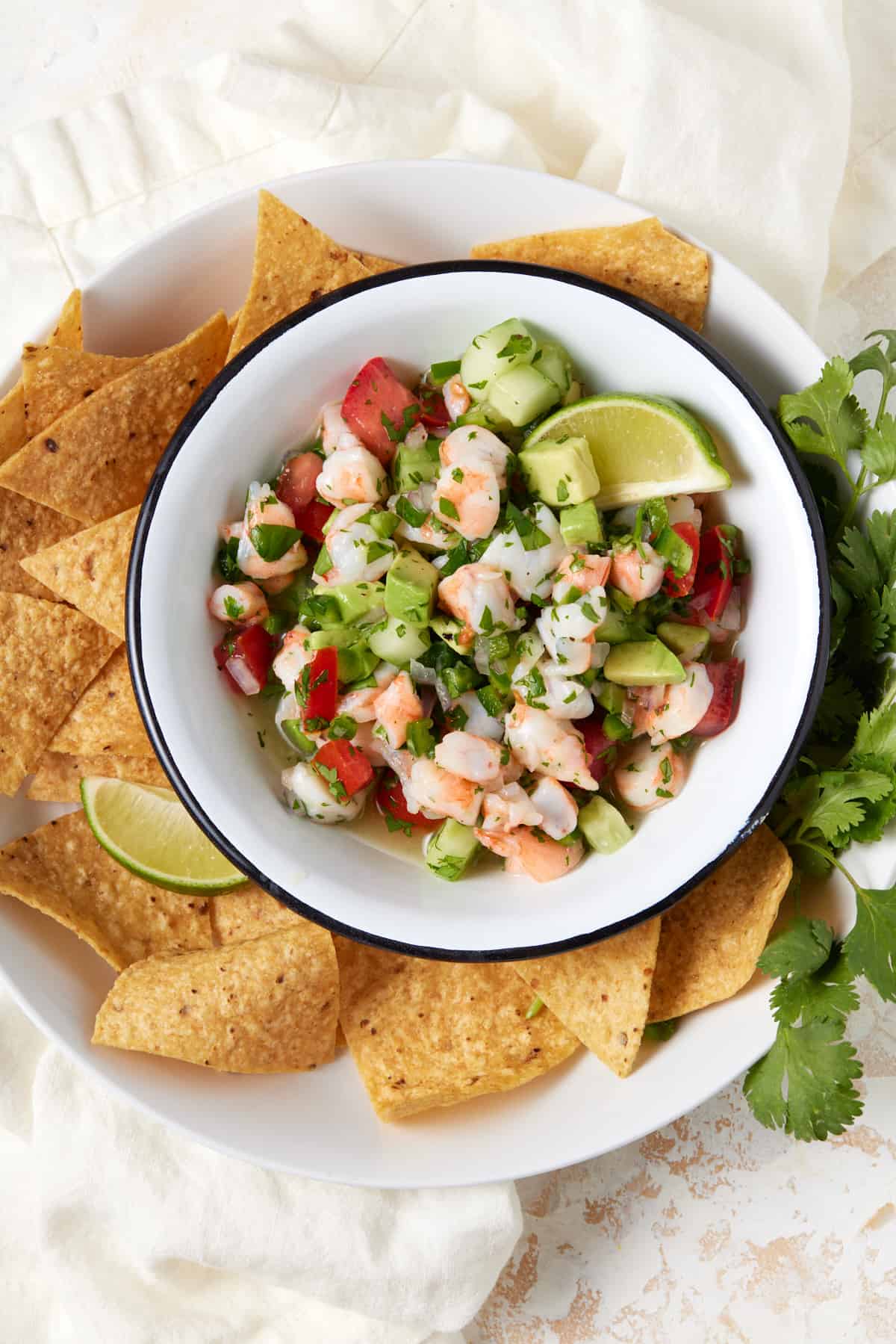
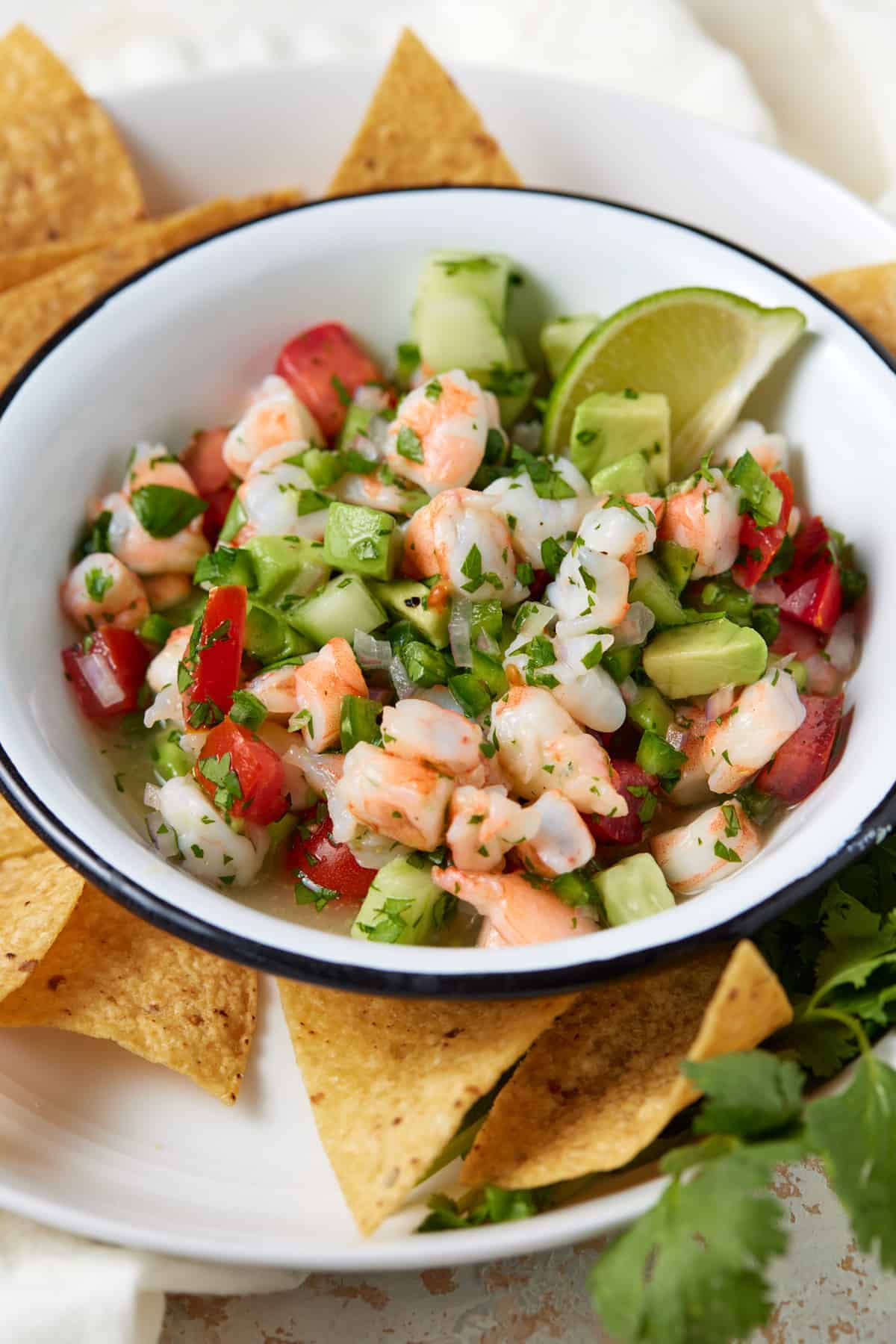
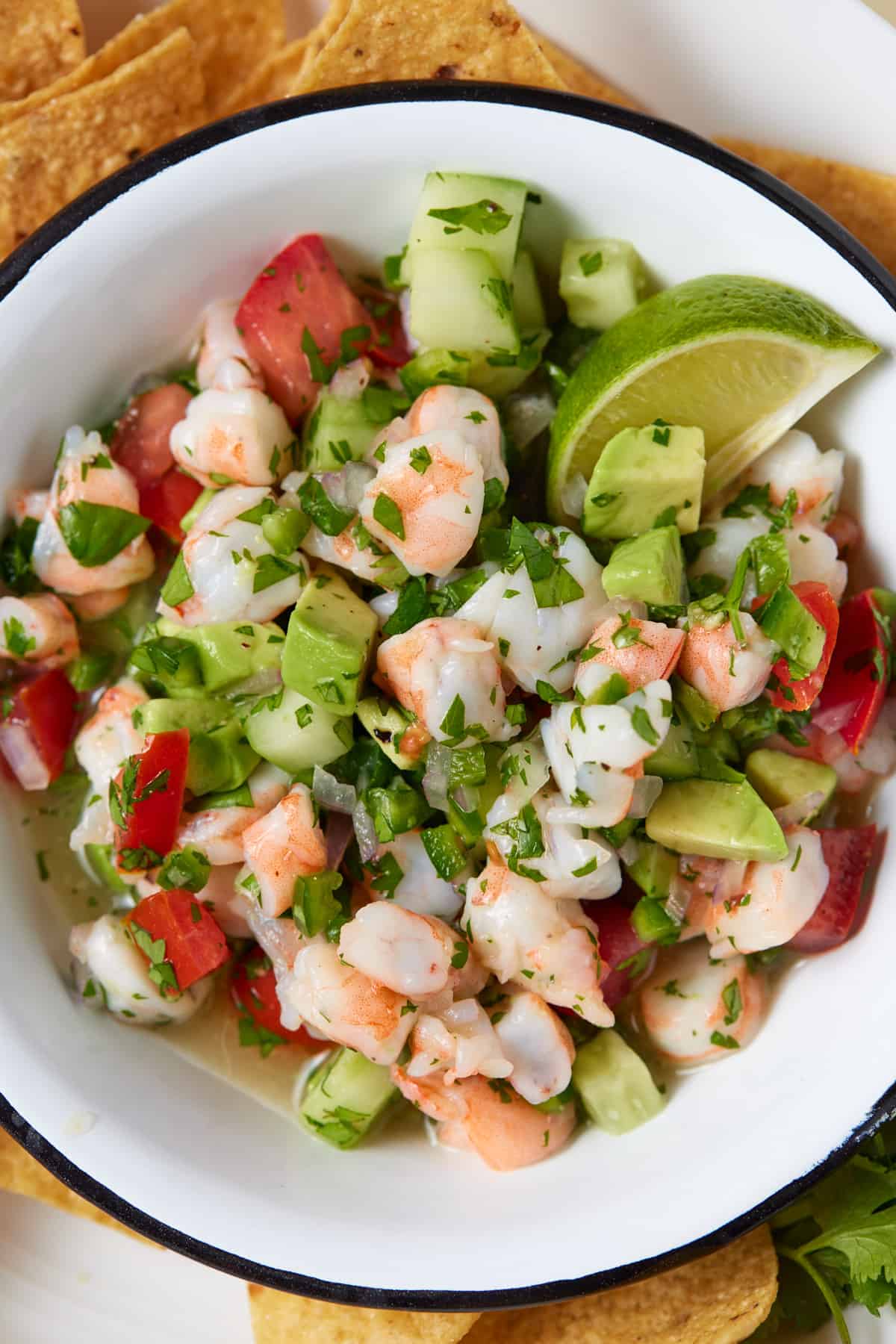
Ceviche de camarón skips the stove entirely. Fresh lime juice does all the cooking: the citric acid changes the shrimp's protein structure the same way heat would, turning it opaque, firm, and bright with citrus. What you end up with is a cold, crunchy bowl of Mexican shrimp ceviche with avocado that disappears fast on a hot day.
The Short Version
The flavor is bright and citrus-forward without tipping into sharp: lime-cured shrimp with crunch from cucumber, heat from jalapeño, and avocado folded in at the end to temper the acid. Cure the shrimp 2 to 3 hours. Go longer and it turns rubbery.
This is what I make when someone asks me to bring an appetizer and I know the host won't have oven space.
One heads-up: this doesn't keep overnight. Make only what you'll eat that day.
Want to save this recipe?
By signing up, you'll join our email list and can unsubscribe at any time.

What I Learned Making This Recipe
Most shrimp will work here. But after making this more times than I can count, I have a clear preference: wild Argentine red shrimp. They're sweeter and more tender than standard Pacific white shrimp, and the flavor sits closer to lobster than what you typically find at the seafood counter. That sweetness is a good contrast against the sharp lime. They're typically flash-frozen at sea right after the catch, so they're reliably fresh when you thaw them.
Jump to:
Ingredients & Substitutions
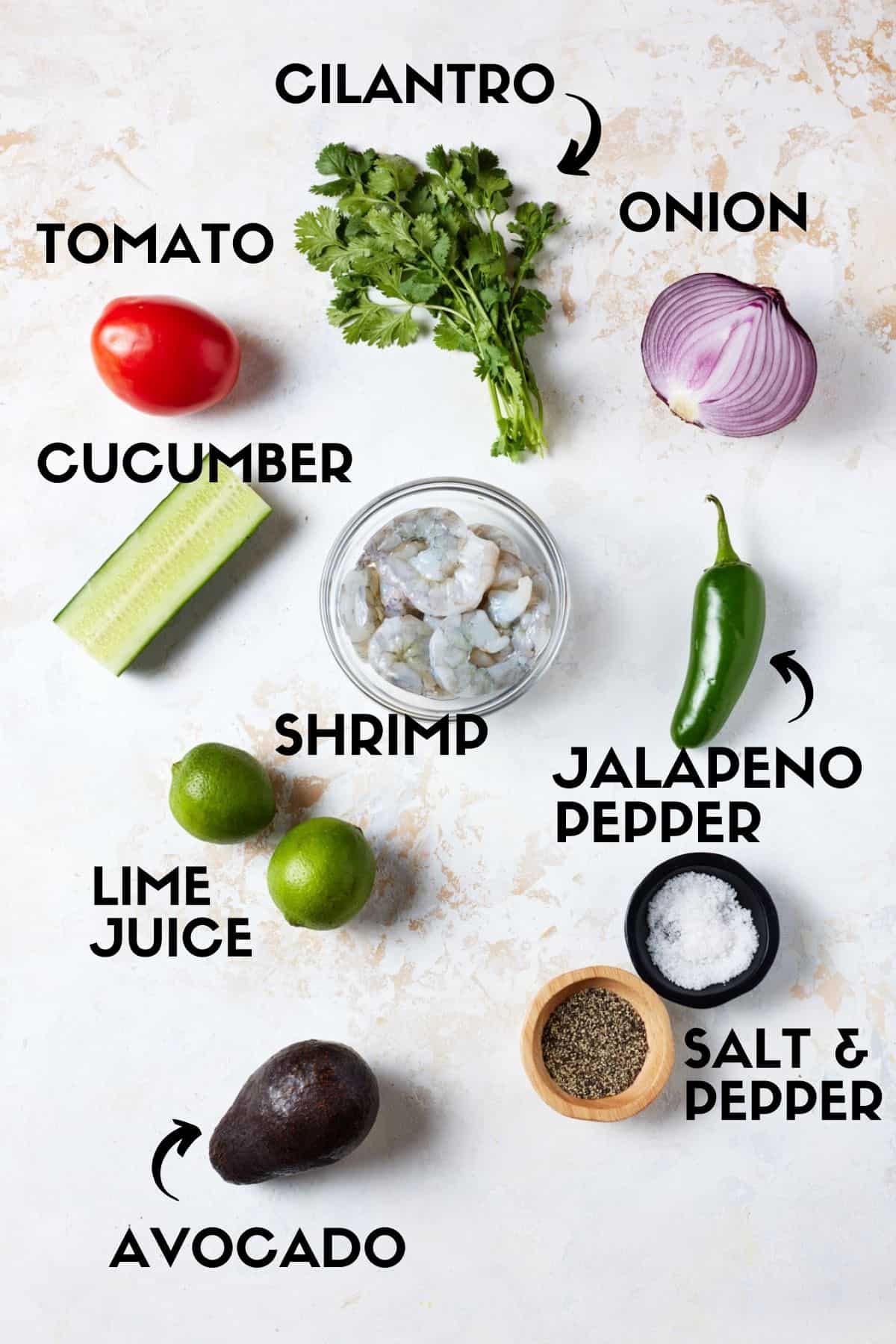
This ceviche has a short ingredient list, and every item earns its place.
Ingredient Notes:
- Shrimp. Buy it raw, peeled, deveined, and tails off. If you can find wild Argentine red shrimp, use them; they're sweeter and more tender than standard Pacific white shrimp and the lime cure does something especially good with that flavor. They're usually sold frozen. Any high-quality frozen shrimp that's been fully thawed works well.
- Note: If you'd rather use cooked shrimp, that works too. Skip the 2 to 3 hour lime cure and add the shrimp directly with the vegetables in step 2 instead. The flavor will be less citrus-forward, but it's a good option if you're cooking for anyone who'd prefer to avoid raw seafood.
- Fresh lime juice. This is not a place for the bottled version. Bottled lime juice has preservatives that affect the pH, and the flavor is noticeably flatter. You need real acid from real limes to do the job. One cup takes approximately 8 to 10 limes depending on size. A bag of smaller limes is almost always cheaper per ounce than buying them individually.
- English cucumber. The mild flavor and nearly seedless flesh is what makes it work here. Regular cucumbers have more seeds and release more water, which dilutes the ceviche. English cucumber keeps everything cleaner and crunchier. Persian cucumbers are a good swap; they're similar in flavor and water content, just smaller, so you'll need a few more to hit a cup.
- Roma tomatoes. They hold their shape better than regular tomatoes and don't release as much liquid. Seeding them is optional, but worth doing if yours are especially juicy.
- Red onion. Slightly milder than white onion, and the color is a bonus. White onion works if that's what you have. The bite is just a little sharper.
- Jalapeño. For medium heat, use one large jalapeño minced with seeds. To dial it back, remove the seeds and membrane before mincing. That's where most of the capsaicin lives. Want more heat? Swap in a serrano.
- Cilantro. If cilantro isn't for you, parsley is the closest substitute. The flavor profile will shift and you'll lose some of the brightness, but it still works. Thai basil is another option if you want something more unexpected.
- Avocado. This goes in last, right before serving. If you add it when you mix in the vegetables, the acid turns it brown and mushy within an hour. Fold it in just before serving and it stays creamy.
- Kosher salt and black pepper. Taste and adjust after chilling. The flavors sharpen as it sits, so go a little lighter than you think you need at the start.
How to Make
Cure the shrimp
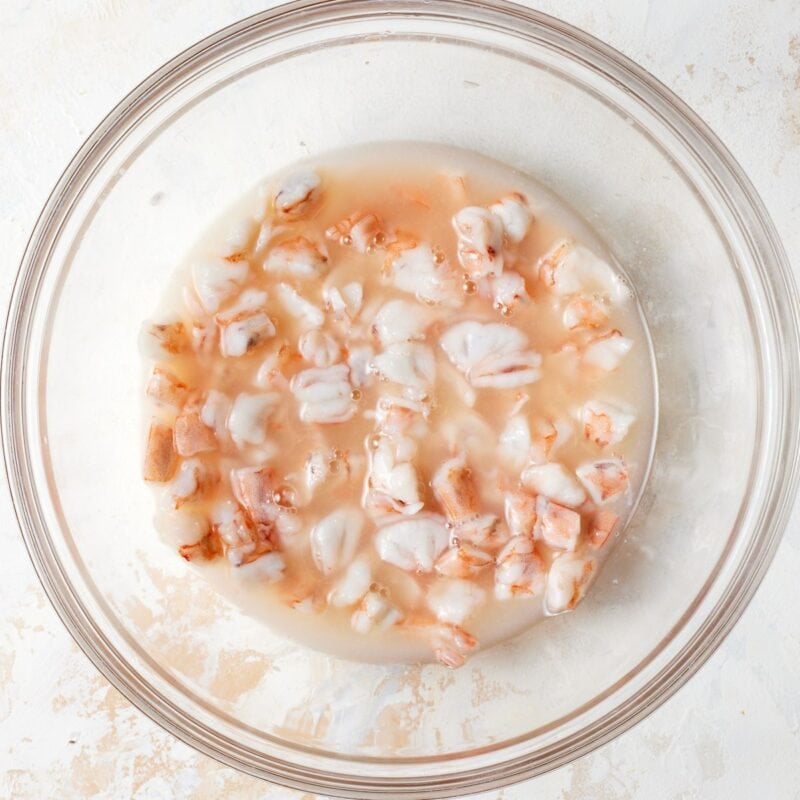
Chop into bite-sized pieces, place in a glass bowl, and pour the lime juice over until all the shrimp is submerged. Cover and refrigerate for 2 to 3 hours, until opaque and pink throughout. Using cooked shrimp? Skip this step and add the shrimp with the vegetables in step 2.

Add the Vegetables
Stir in cucumber, tomato, onion, jalapeño, cilantro, salt, and pepper. Taste and adjust seasoning. Return to the refrigerator for at least 20 minutes and up to 1 hour.
Finish and Serve
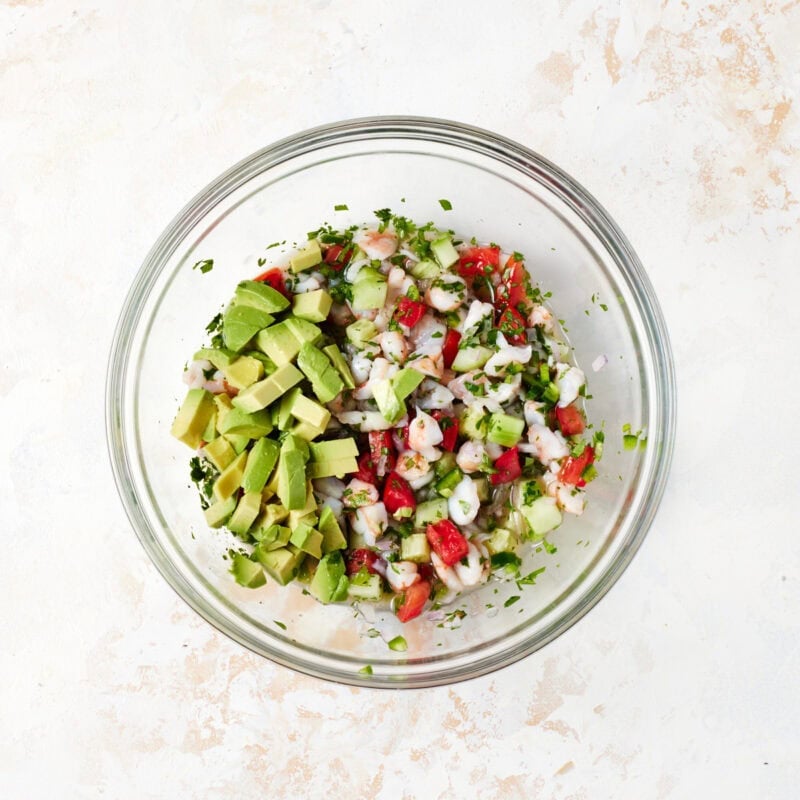
Fold in diced avocado just before serving. Serve cold with tortilla chips.
Before You Make This
- Use a glass bowl. Lime juice reacts with aluminum, giving the shrimp a metallic off-taste. Glass is the safest call regardless of what bowls you have.
- Don't over-marinate the shrimp. The 2 to 3 hour window in step one is intentional. After about 4 hours, the shrimp turns rubbery and chalky (the same thing that happens when you overcook it on the stove). Set a timer.
- Add the avocado at the very end. Lime juice turns avocado brown and mushy within an hour. Fold it in right before you serve, not when you add the other vegetables.
- Chop everything to similar sizes. Ceviche is scooped with a chip. If the pieces are too large, they slide off. Bite-sized is the target for shrimp and vegetables alike.
- Buy pre-prepped shrimp. Peeled, deveined, tails off. It's worth paying for. The prep work is already done and you can go straight to chopping.
- Keep it cold. Serve directly from the fridge, or over ice if you're bringing it somewhere. Ceviche at room temperature loses its appeal fast.
Serving Suggestions
Tortilla chips are the classic pairing, and they work well here. Tostadas are the more traditional option if you want something sturdier to scoop with. Saltines are another common accompaniment in Mexican ceviche. The plainness is a good contrast to the bright acid.
If you're building a summer spread, this pairs well alongside our salsa made with roasted corn for a little variety at the chip-and-dip table.
FAQs
Fresh lime juice changes the shrimp the same way heat would. The texture firms up, it turns opaque and pink, and it looks and feels cooked. However, acid doesn't eliminate all potential parasites the way heat does. Buy your shrimp from a trusted seafood source, the same standard you'd apply to sushi. The FDA advises that pregnant women, older adults, young children, and people with compromised immune systems avoid raw or undercooked seafood, including acid-cured ceviche. If that applies to your group, the cooked shrimp option in the ingredients section is the right call.
Shrimp cocktail is cooked with heat and served chilled in or alongside a tomato-based sauce. Ceviche de camarón cures the shrimp in citrus juice and mixes it with fresh vegetables. The textures are different too. Ceviche tends to be more tender and citrus-bright, while shrimp cocktail has a firmer, boiled texture.
Make Ahead, Freezing & Storage
Ceviche de camarón doesn't keep well. The acid in the lime juice continues to work on the shrimp even after refrigeration. By the next day, the shrimp turns gray and the texture goes tough. Make it the day you're serving it, and plan portions for what you'll eat in one sitting. It does not freeze.
More easy, no-cook appetizers


Made this? Loved it? Tell us everything!
Leave a quick star rating and comment below so we can trade tips and cheer each other on.
Who knows? Your twist might become someone else's new favorite!
Recipe

Ceviche de Camarón (Shrimp Ceviche)

Ingredients
- 1 pound raw large shrimp, peeled, deveined and tails removed
- 1 cup freshly squeezed lime juice
- 1 cup peeled, diced English cucumber
- 1 cup diced Roma tomatoes
- 1 cup chopped red onion
- 1 large jalapeño pepper, minced
- ½ cup chopped fresh cilantro
- 1 teaspoon kosher salt
- ½ teaspoon ground black pepper
- 1 large avocado
Want to save this recipe?
By signing up, you'll join our email list and can unsubscribe at any time.
Instructions
- Chop shrimp into similar sized pieces and place in a glass bowl. Pour lime juice over the shrimp, making sure all pieces are submerged. Cover and refrigerate for 2 to 3 hours. The shrimp will turn opaque and pink when fully cured. Do not over-marinate. Beyond 4 hours, the acid from the lime juice makes the shrimp rubbery Using cooked shrimp? Skip this step and add the shrimp with the vegetables in step 2.1 pound raw large shrimp,, 1 cup freshly squeezed lime juice
- Add cucumber, tomatoes, onion, jalapeño, cilantro, salt and pepper to bowl with shrimp. Stir to combine and taste for seasoning. Return to refrigerator for at least 20 minutes and up to one hour to let the flavors come together.1 cup peeled, diced English cucumber, 1 cup diced Roma tomatoes, 1 cup chopped red onion, 1 large jalapeño pepper, , ½ cup chopped fresh cilantro, 1 teaspoon kosher salt, ½ teaspoon ground black pepper
- Dice avocado and fold it in gently just before serving. Serve cold with tortilla chips.1 large avocado
Notes
- Use a glass bowl. Acid reacts with aluminum and can give the shrimp a metallic taste.
- Fresh or frozen shrimp both work in any size from medium to extra large. Buy from a trusted seafood source. The FDA advises pregnant women, older adults, young children, and immunocompromised individuals to avoid raw or undercooked seafood, including acid-cured ceviche.
- Bags of smaller limes are usually less expensive per ounce than buying individual limes. A citrus juicer makes quick work of the quantity needed.
- Chop shrimp and vegetables to similar sizes so the ceviche is easy to scoop with a chip.
- Ceviche does not keep. The shrimp turns gray and tough after extended time in the lime juice. Make only what you'll eat in one sitting. Does not freeze.
VIDEO
Nutrition
Nutrition info not guaranteed to be accurate.
Comments
No Comments