
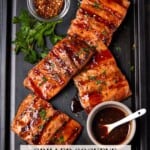
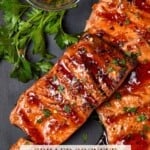
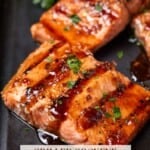
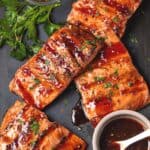
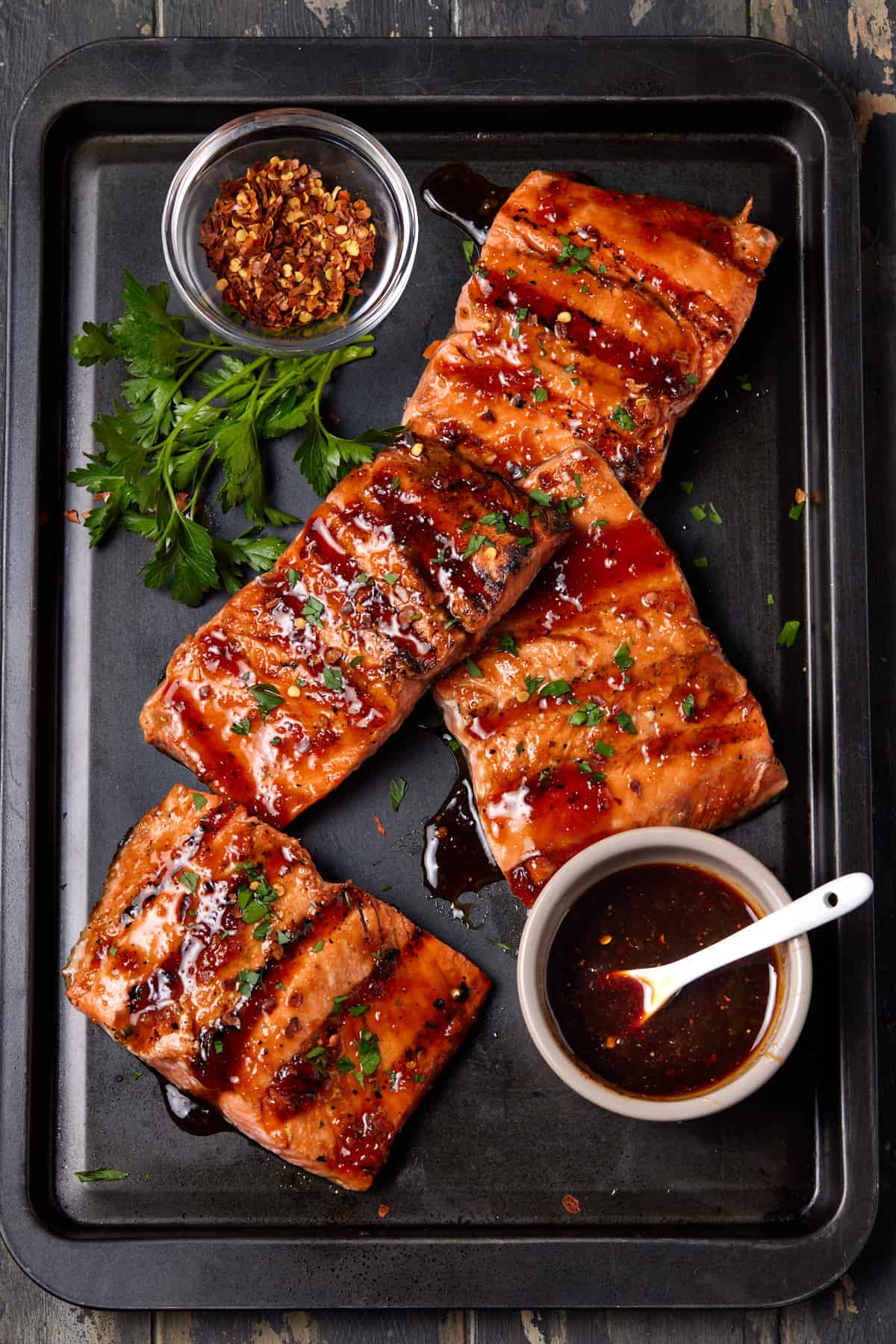
This grilled sockeye salmon is a quick summer dinner with a sweet-savory maple ginger glaze. Because sockeye is leaner and thinner than Atlantic salmon, it cooks quickly and benefits from high heat and a short cooking time to keep it moist.
What Makes This Different
If you've mostly cooked Atlantic salmon, know that sockeye cooks faster. It's leaner and typically thinner, which means it overcooks quickly and needs different handling than the farmed salmon commonly used in many recipes.
The method: start flesh-side down on a very hot grill, flip once, glaze twice, and pull at 120-125°F while the center still looks slightly translucent. It keeps cooking off the heat, which is what keeps it from drying out.
The glaze is maple syrup, balsamic, fresh ginger, and garlic, reduced until it coats a spoon. Divide it between two bowls before you start: one for basting, one for serving. The whole thing takes about 20 minutes.
Want to save this recipe?
By signing up, you'll join our email list and can unsubscribe at any time.

What I Learned Making This Recipe
I originally grilled salmon the conventional way, skin-side down first, but I kept ending up with a pale presentation side. Starting flesh-side down gave me much better color and caramelization.
The key is not forcing the flip. After about two minutes, slide a thin spatula under the salmon. If it releases easily, turn it. If it sticks, give it another 30 seconds.
Jump to:
Five Star Review
⭐️⭐️⭐️⭐️⭐️
"Thanks, finally a wild salmon recipe by someone who knows how to prepare and properly cook it."
- John
Ingredients & Substitutions
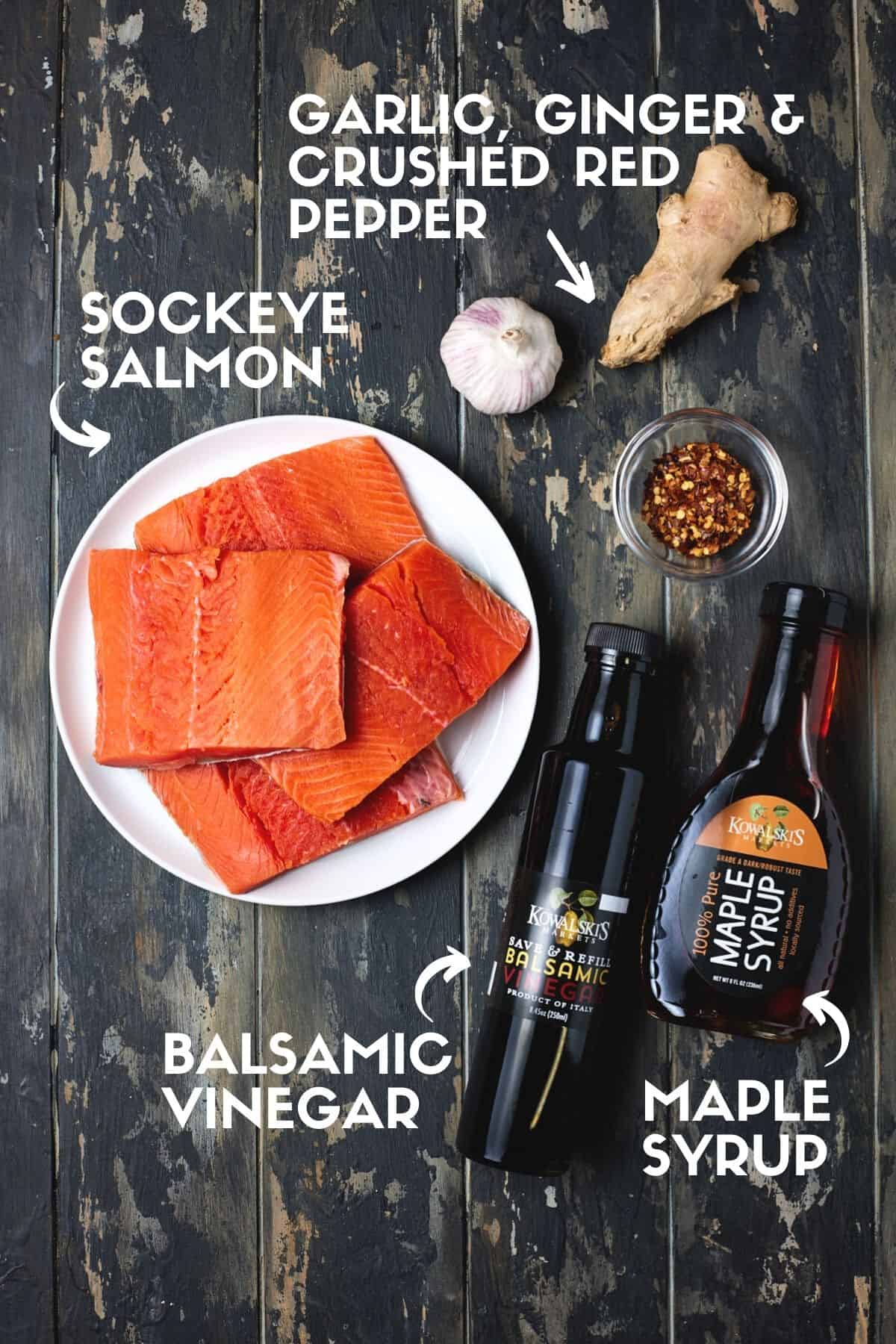
- Sockeye salmon fillets: Keep the skin on. It helps hold these lean fillets together when you flip them and protects the fish as it finishes cooking. Fresh sockeye is usually available from late spring through early fall, but frozen works well, too.Thaw fully in the fridge overnight and pat very dry before grilling, especially with frozen fish, which releases more moisture than fresh.
- Pure maple syrup: Use the real stuff rather than pancake syrup. Maple syrup gives the glaze its sweetness and helps it caramelize on the salmon. Grade A dark amber will give you the strongest maple flavor.
- Balsamic vinegar: The acidity balances the sweetness of the maple syrup and gives the glaze more depth. No need to pull out an expensive bottle here; the everyday stuff works fine.
- Fresh ginger, freshly grated: I'm a ginger lover, so the 1½ tablespoons in this recipe is intentionally generous. If you prefer a milder ginger flavor, start with 1 tablespoon. Freshly grated ginger gives the glaze a brightness you won't get from dried.
- Fresh garlic, minced: Fresh is worth it here. Jarred garlic has a muted flavor that gets lost in the glaze.
- Crushed red pepper flakes: Optional, but I almost always add them. Even a small pinch cuts the sweetness in a way that makes the whole glaze more interesting. Start at ¼ teaspoon and add more if you like.
- Avocado oil: You'll use this on both the salmon and the grill grates. I like avocado oil because its neutral flavor and high smoke point work well on a hot grill. Olive oil will burn and smoke at high temps.
How To Make Grilled Sockeye Salmon
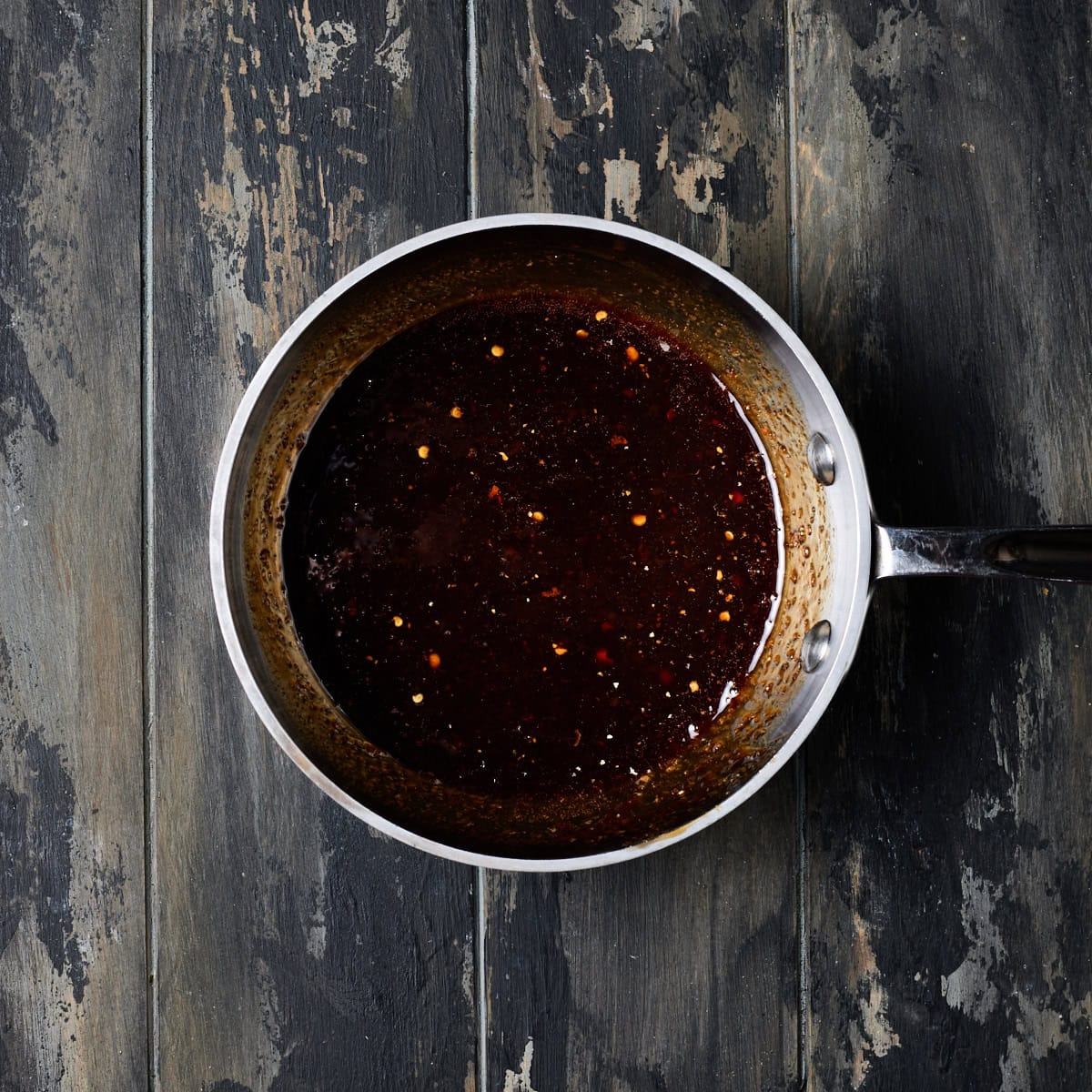
- Make the glaze: Simmer maple syrup, balsamic, garlic, ginger, and red pepper flakes until reduced by a third and thick enough to coat a spoon. Divide between two bowls.
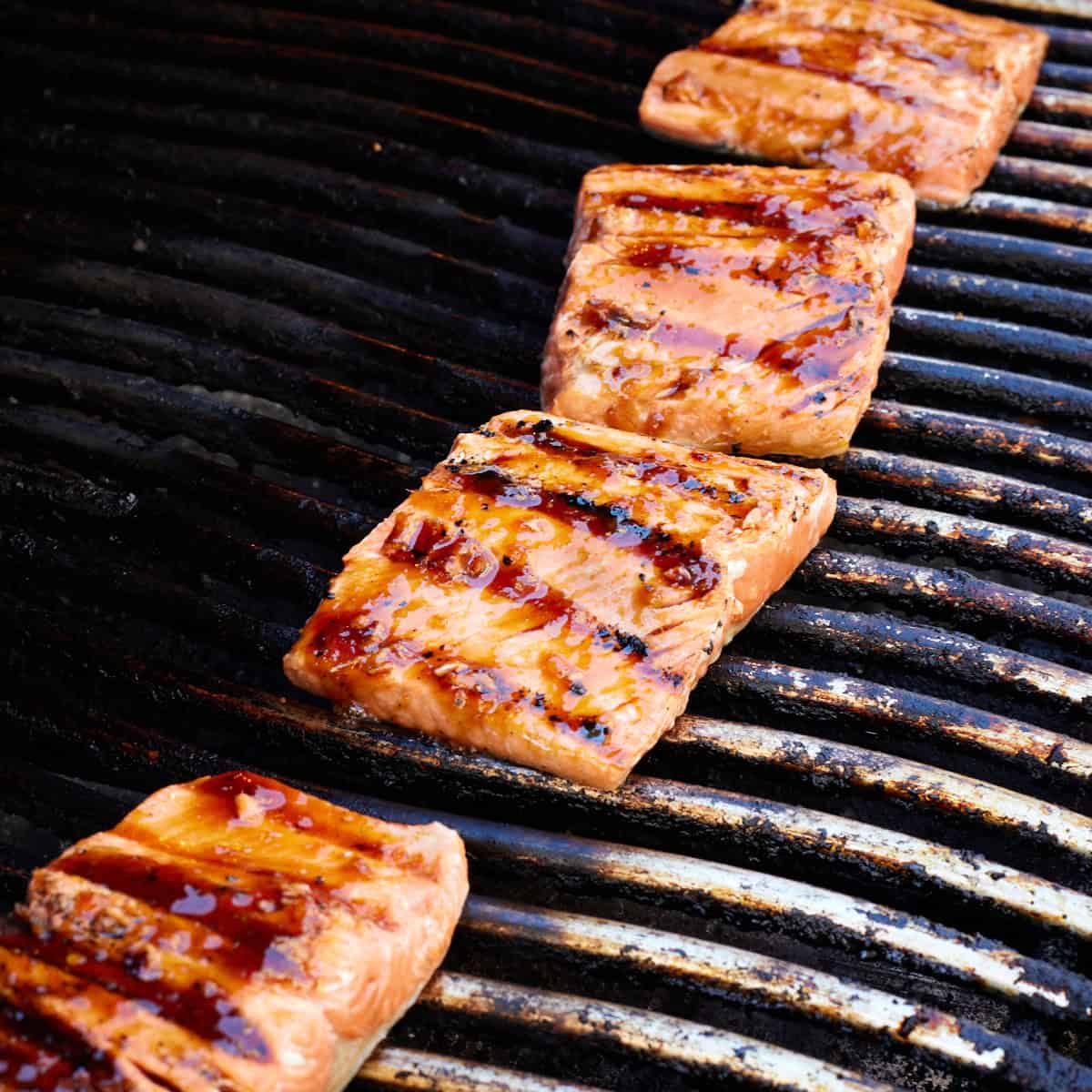
- Grill salmon: Pat salmon dry, oil and season. Oil the grill grates. Place salmon skin side up on the hot grates. Grill for 2 minutes (longer if fillets are thicker) or until it releases easily. Flip fillets so skin side is down and brush with glaze, cover and cook for 1 minute. Brush again, cover and cook for 30-60 seconds.
- Finish: Remove at 120-125°F for juicy, flaky fish. Serve with reserved glaze.
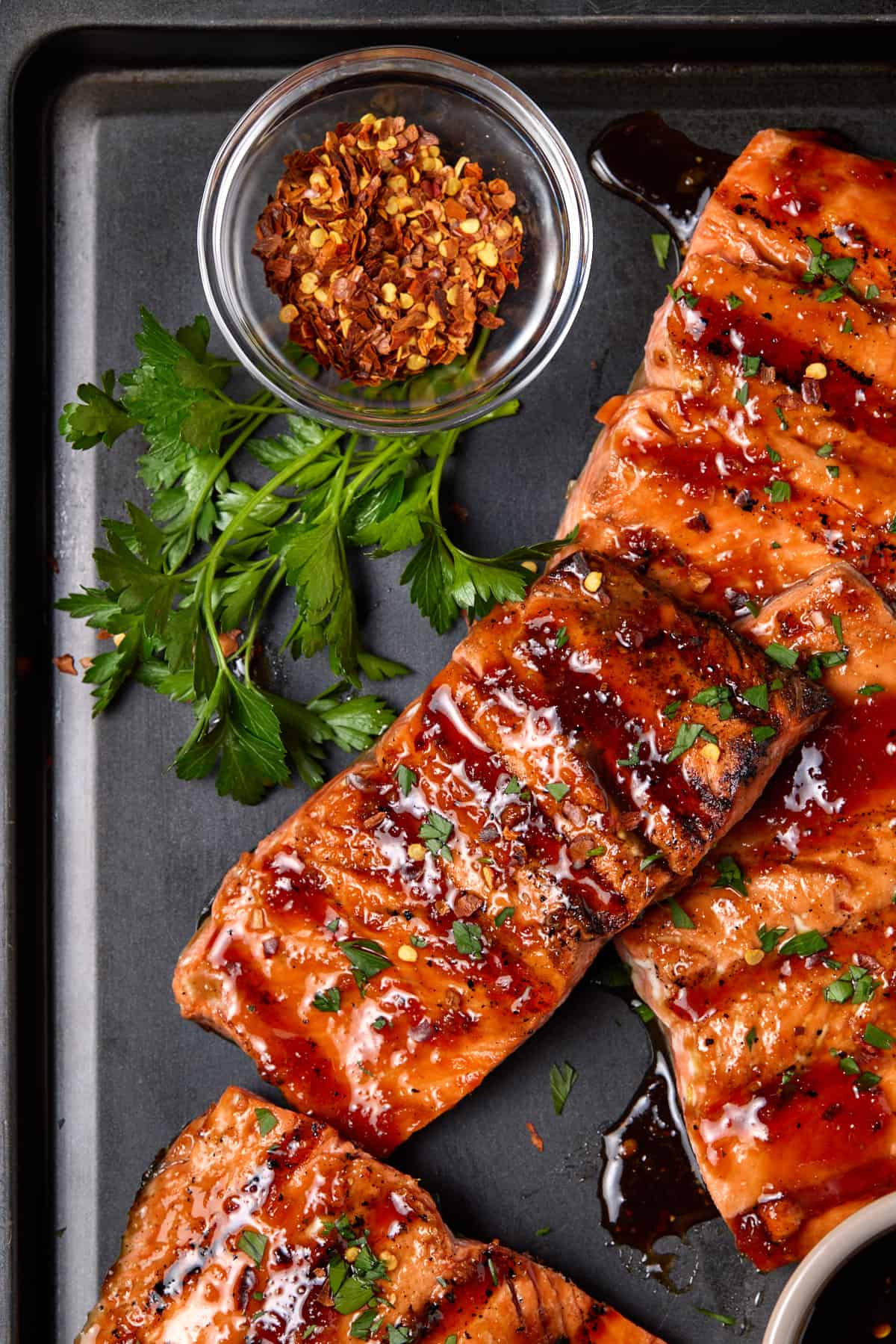
Before You Make This
- Get the salmon really dry. This is especially important if you're using previously frozen sockeye. Extra surface moisture gets in the way of a good sear, so give the fillets a thorough pat with paper towels before you oil and season them.
- Start with a hot, clean grill. Let the grill reach about 450°F and give the grates a good cleaning before you oil them to get rid of any leftover food. It's one of the easiest ways to prevent delicate salmon from sticking.
- Oil the fish AND the grates. Yes, both. Oiling the grates helps prevent sticking, while the thin coating of oil on the salmon helps the flesh make good contact with the heat and caramelize.
- Don't rush the flip. This is the big one. Once the salmon goes down, resist the urge to move it around. When a good sear has formed, the fish will release much more easily. If your spatula meets resistance at the 2-minute mark, wait another 30 seconds and try again.
- Cook to temperature, not time. Sockeye fillets can vary quite a bit in thickness, so the clock only gets you so far. I rely on an instant-read thermometer and pull the salmon at 120-125°F, when the center is still slightly translucent. It will continue cooking after it comes off the grill. The USDA recommends cooking fish to 145°F. I prefer to pull wild sockeye earlier because it is so lean and can become dry quickly, so choose the temperature that works best for you.
- Thicker fillet? Give it more time. This recipe is written for the thinner fillets typical of sockeye salmon. If yours are especially thick, they'll likely need another minute or two on the skin side before reaching temperature.
Serving Ideas
The reserved glaze is worth drizzling over the finished fish and over any grain or vegetable on the plate. Sockeye's assertive flavor can handle bold sides. Broccoli roasted in the oven can go in before you start the grill. Roasted brussels sprouts with balsamic vinegar echo the balsamic in the glaze in a way that works well on the same plate. Rice, couscous, or quinoa underneath the fish gives the glaze somewhere to pool.
FAQs
No. The skin acts as a barrier between the flesh and the grates on the final side of cooking, which helps the fish stay moist and come off in one piece. After grilling, it slides off easily with a thin spatula if you don't want to eat it.
Yes. Place oiled fillets skin-side down on a greased sheet pan. Brush with a quarter of the glaze and bake at 400°F for 4 minutes. Brush with another quarter of the glaze and broil 6 inches from the heat for 1-2 minutes, watching closely so the glaze doesn't burn.
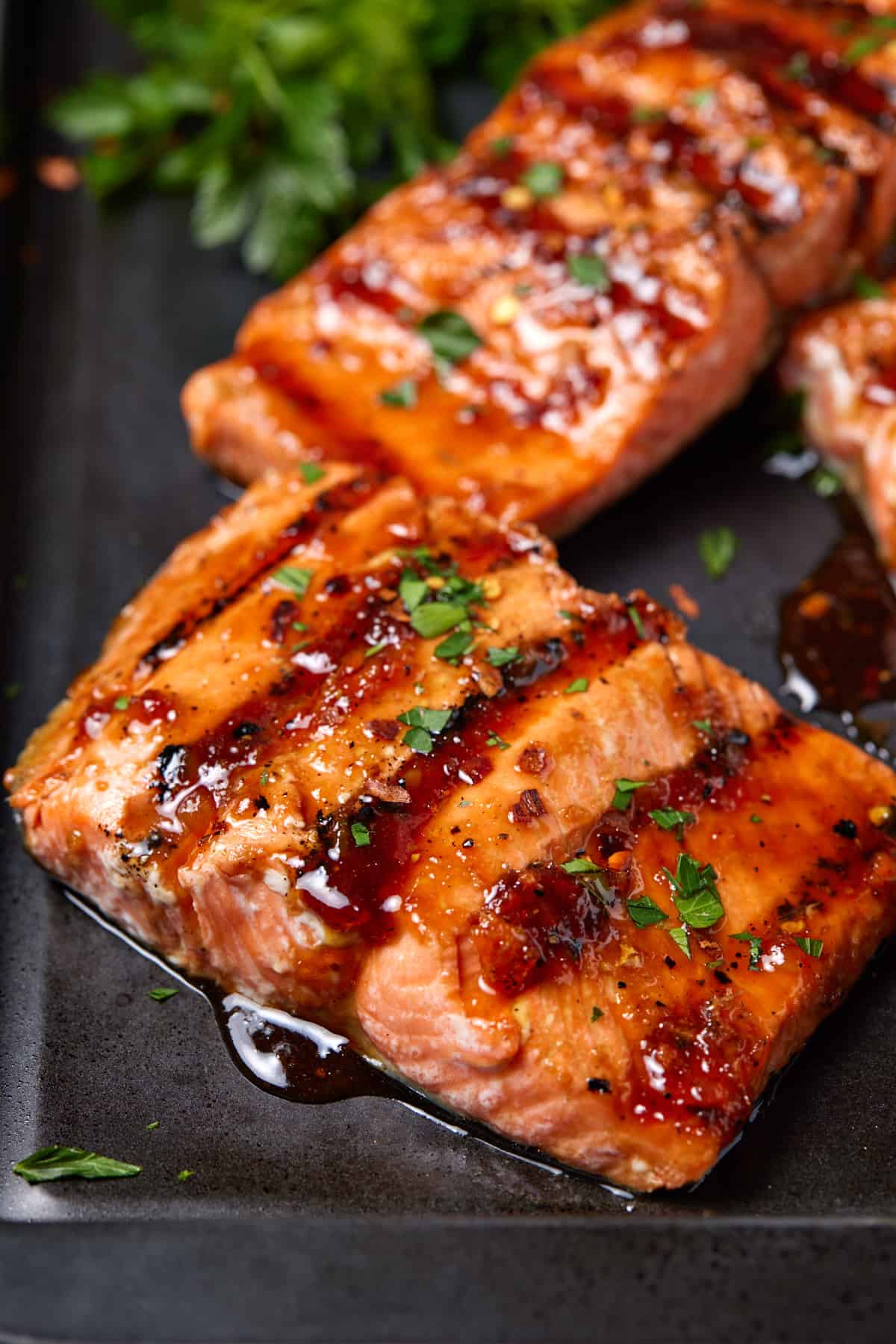
Make ahead and storage
Make ahead: The maple ginger glaze can be made up to 3 days ahead and kept refrigerated. It gets quite thick when it's cold, so warm it gently before using.
Leftovers: Store leftover grilled sockeye salmon in the refrigerator for up to 3 days. I don't love reheating it because lean sockeye dries out pretty quickly. Instead, flake the cold salmon over a salad or add it to a grain bowl.
Made this? Loved it? Tell us everything!
Leave a quick star rating and comment below so we can trade tips and cheer each other on.
Who knows? Your twist might become someone else's new favorite!
Recipe
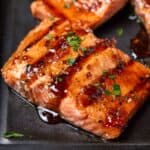
Grilled Sockeye Salmon recipe with Maple Ginger Glaze

Ingredients
- 1½ pounds skin-on sockeye salmon, cut into four fillets
- ⅓ cup pure maple syrup
- 2½ tablespoons balsamic vinegar
- 1½ tablespoons fresh ginger, peeled and grated
- 2 teaspoons fresh garlic, minced
- ¼-½ teaspoon crushed red pepper flakes (depending on heat preference)
- Kosher salt & freshly ground pepper
- Avocado oil (or other neutral flavored oil with high smoke point)
Want to save this recipe?
By signing up, you'll join our email list and can unsubscribe at any time.
Instructions
- Remove salmon fillets from the refrigerator and allow to come to room temperature. Preheat grill to 450°F.1½ pounds skin-on sockeye salmon,
- While the grill heats, whisk together the maple syrup, balsamic vinegar, ginger, garlic and red pepper flakes in a small saucepan. Bring to boil over medium heat. Reduce heat to medium-low and continue cooking until sauce is reduced by ⅓ and thick enough to coat the back of a spoon, about 5 minutes. Season with salt and pepper. Divide evenly between two bowls: one for basting, one for serving.⅓ cup pure maple syrup, 2½ tablespoons balsamic vinegar, 1½ tablespoons fresh ginger, , 2 teaspoons fresh garlic, , ¼-½ teaspoon crushed red pepper flakes , Kosher salt & freshly ground pepper
- Pat salmon fillets completely dry with paper towels. Brush both sides generously with avocado oil. Season with salt and pepper. Using tongs, rub a paper towel soaked in avocado oil across the grill grates.Avocado oil , Kosher salt & freshly ground pepper
- Place salmon fillets FLESH SIDE DOWN on the grates. Reduce heat to medium-low and cook for 2-3 minutes without moving, until the fish releases easily when you slide a spatula underneath. If it sticks, wait another 30 seconds.
- Flip fillets so skin side is down. Immediately brush with half the basting glaze. Close the grill and cook for 1 minute. Brush with the remaining basting glaze, close the grill, and cook another 30-60 seconds.
- Check the internal temperature and pull the salmon at 120-125°F. The center will look slightly translucent; it will continue cooking off the heat. Serve immediately with the reserved glaze.
Notes
VIDEO
Nutrition
Nutrition info not guaranteed to be accurate.
Lori says
Delicious! Our new favorite way to enjoy salmon. The sauce is very flavorful so we had plenty to use on our vegetables.
So glad you enjoyed the recipe, Lori! It's one of our favorite salmon recipes, too!
Carol Easton says
The fish is under seasoned. Needs salt and pepper on the fish before grilling
John says
Thanks, finally a wild salmon recipie by someone who knows how to prepare and properly cook it. I cringe every time I read a wild salmon recipie that calls for more than a short marinade. Especially when it involves an acidic ingredient. I always keep it simple when grilling or smoking wild salmon. Let the salmon speak for itself. Never over marinate.
Rick says
Um, did you even read the recipe instructions?
Madonna says
The sauce was good but a little strong with that much ginger. I’m thinking half the ginger. It was pretty thick so I may have cooked the sauce too long.
Glad you tried it! I'm definitely a ginger lover, so I always go big with the ginger. Try a lesser amount next time if that suits you!