




These homemade dinner rolls are soft, fluffy and buttery, thanks to two ingredients you might not expect: instant potato flakes and dry milk powder. You don't need to cook or mash any potatoes, and the stand mixer does all the kneading.
These are my family's favorite homemade rolls and a regular on our Thanksgiving table. And coming from someone who's much more comfortable cooking than baking, that's saying something!

Want to save this recipe?
By signing up, you'll join our email list and can unsubscribe at any time.
What Makes These Different
- Two pantry ingredients make all the difference. Instant potato flakes help the rolls stay soft and tender, while dry milk powder adds richness and helps them brown beautifully.
- No wrestling with sticky dough. After kneading, the dough is smooth and pulls cleanly away from the mixer bowl, making it easy to handle and shape.
- The mixer does the hard work. All the ingredients go into one bowl, and the dough hook takes care of the kneading. No need to worry about your technique.
- You can make the dough ahead. Refrigerate it overnight after the first rise, then shape and bake the rolls the next day.
Jump to:

Homemade Bread without the Guesswork
I'll be the first to admit that baking isn't my strong suit. I love to cook, but baking sometimes feels like a science experiment where one wrong move can throw everything off.
That's one reason I keep coming back to these dinner rolls. The dough is easy to work with, the stand mixer handles the kneading, and you don't need any fancy bread-making skills.
The biggest thing I've learned is to pay attention to the dough rather than the clock. My rolls rise much faster in the warmer months than they do in the winter. Once you know what to look for, making homemade rolls feels a lot less intimidating.
Ingredients
Most of the ingredients are probably already in your pantry. A few are worth calling out because they make this recipe a little different from traditional yeast rolls.

- Instant potato flakes: These are the secret to the soft, fluffy texture. They help the dough retain moisture without requiring freshly cooked or mashed potatoes. Use plain, unseasoned potato flakes and add them directly to the mixing bowl. I haven't tested this recipe with fresh mashed potatoes, so I wouldn't recommend swapping them.
- Dry milk powder: Adds richness, contributes to the tender texture and helps the rolls develop those golden tops. Make sure you're using regular dry milk powder, not malted milk powder.
- Instant yeast: My go-to for bread recipes because you can mix it right in with the other ingredients without proofing it first. I haven't tested these rolls with active dry yeast.
- All-purpose flour: This is what I've tested and recommend. For the most consistent results, use a kitchen scale to measure 375 grams. If you don't have one, spoon the flour into your measuring cup and level it off.
Butter, sugar, salt and warm water round out the dough. A final brushing of melted butter gives the baked rolls their soft, buttery tops.
How to Make Homemade Dinner Rolls
You'll need to allow time for two rises, but most of that is hands-off. Here's what the process looks like.
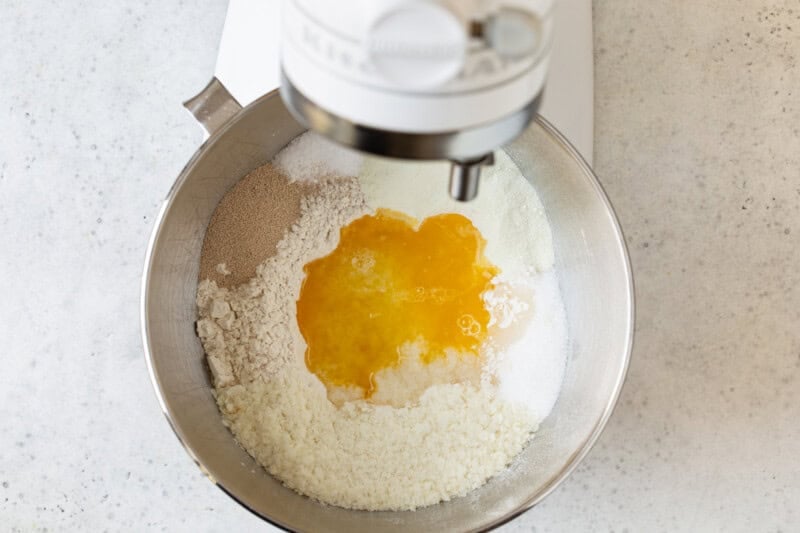
Mix and Knead
Combine the ingredients in a stand mixer and knead until the dough is smooth and pulls cleanly away from the bowl.
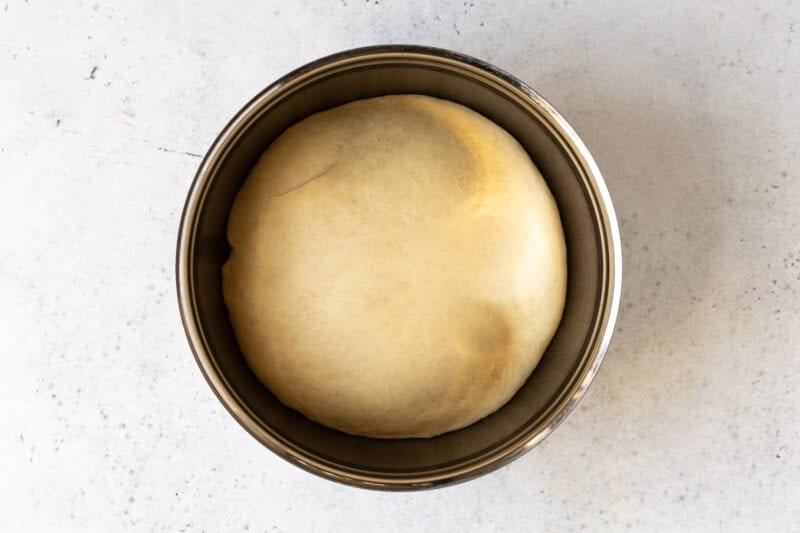
Let the dough rise
Cover the dough and let it rise until doubled in size, about 60-90 minutes.
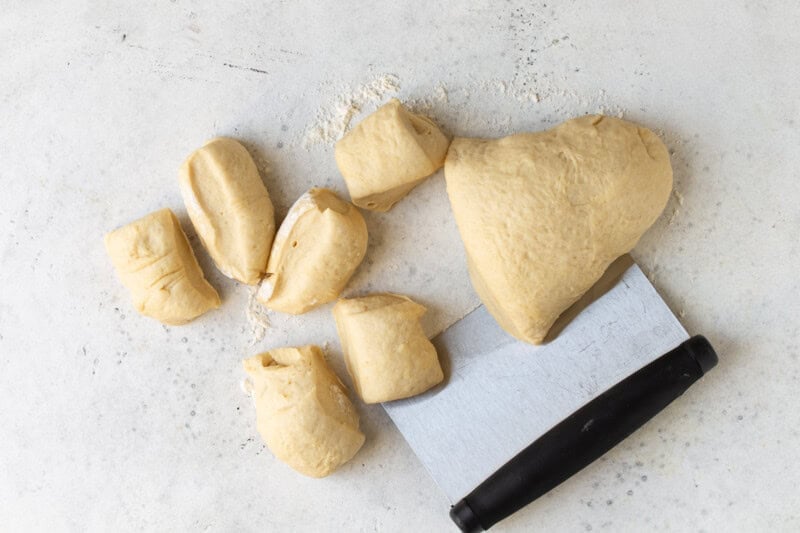
Divide and Shape
Divide and shape. Turn the dough onto a lightly floured surface and divide into 12 equal pieces (about 60-63 grams each). Roll each piece into a smooth ball. Tip: I use a bench scraper to cut the dough into pieces. You'll get clean cuts every time. Don't have one? You can also use a sharp knife.
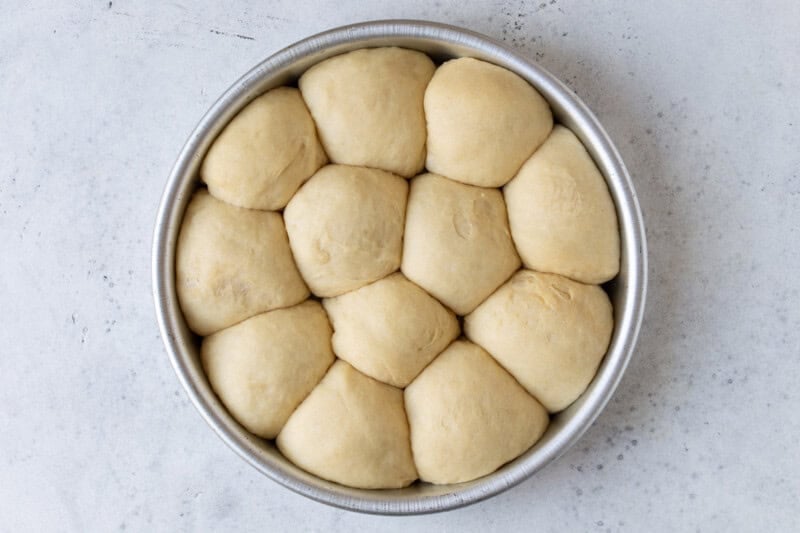
Let the rolls rise again
Arrange the shaped dough balls in a greased 9-inch round cake pan, leaving a little space between them. Cover and let rise until doubled in size, puffy and touching one another.

Bake and butter
Bake until golden brown and the centers reach 195°F. Brush the hot rolls with melted butter and finish with a sprinkle of flaky sea salt, if you like.

Before You Make These Rolls
A few things I've learned that will help you get the best results.
Use a kitchen scale if you have one. I get more consistent baking results when I measure in grams rather than cups. I've had this scale for years and it works flawlessly. No scale? No problem. Spoon the flour into your measuring cup and level it off with a knife. Scooping directly from the bag can pack in too much flour and leave you with dense rolls.
Don't rush the rise. A warm kitchen speeds things up, while a chilly one can slow things down considerably. I go by how much the dough has risen rather than watching the clock. If your oven has a proof setting, it can help when you're short on time. Follow your oven's instructions and remove the dough before preheating.
Keep the rolls the same size. A bench scraper is my favorite tool for dividing dough because it gives you clean cuts, but a sharp knife works, too. Using a kitchen scale to portion the dough helps the rolls rise and bake evenly.
Brush with butter while they're hot. Don't wait until the rolls cool. The melted butter softens the tops and gives them that lovely buttery finish.
No round cake pan? An 8-inch square pan works, too.

Make Ahead and Storage
These dinner rolls are best served the day they're baked, but you can get a head start by making the dough the night before.
Make the dough ahead
Prepare the dough and let it complete its first rise. Once doubled, punch it down, cover tightly and refrigerate overnight.
The next day, let the dough sit at room temperature for 20-30 minutes before shaping. I found that dough straight from the refrigerator was harder to roll into smooth balls. Giving it a little time to warm up makes shaping much easier.
Divide into 12 equal pieces, shape into balls and arrange in your prepared pan. Cover and let rise until doubled and the rolls are puffy and touching one another.
Plan on about 2 hours for the second rise. That's how long my refrigerated dough took. If you're pressed for time, your oven's proof setting may help speed things along.
Bake as directed.
Can I freeze the dough?
Freezing unbaked yeast dough can affect how well it rises, so I prefer making these rolls fresh or refrigerating the dough overnight. That's the method I've tested and can confidently recommend.
Storing leftover rolls
These rolls are at their best the day they're baked, but leftovers are still delicious gently reheated the next day. Let them cool completely, wrap well and store at room temperature.
To reheat, wrap the rolls in foil and place in a low oven until warmed through. After about two days, they'll start to lose some of that wonderful soft texture.

Change Up the Butter
I usually stick with plain melted butter and a sprinkle of flaky sea salt, but you can easily change the flavor to suit your meal.
Garlic rosemary butter: Mix 2 tablespoons melted butter with 1 finely minced garlic clove and 2 teaspoons finely chopped fresh rosemary. Brush over the warm rolls.
Honey butter: Combine 1½ tablespoons melted butter with ½ tablespoon honey for a slightly sweet finish.
Both are simple ways to give the rolls a little something extra without changing the dough itself.
What to Serve with Dinner Rolls
These are a regular on my Thanksgiving table along with our mashed potatoes (that you can make ahead of time), our family's favorite wild rice recipe, this cornbread stuffing with sausage and our 20 minute cranberry sauce.
They're also perfect for soaking up our make-ahead turkey gravy or serving with a cozy bowl of soup.
And if you happen to have a few leftover, these rolls make great sliders for leftover turkey breast on Thanksgiving or beef tenderloin on Christmas. They're almost worth making extra rolls for!
Made this? Loved it? Tell us everything!
Leave a quick star rating and comment below so we can trade tips and cheer each other on.
Who knows? Your twist might become someone else's new favorite!
Recipe

Soft Homemade Dinner Rolls

Ingredients
- 3 cups all-purpose flour (375 g)
- 2 tablespoons sugar
- 2 teaspoons instant yeast
- 1 teaspoon salt
- ¼ cup dry milk powder
- ½ cup instant potato flakes
- 5 tablespoons melted butter (divided)
- 1 cup warm water (105-115°F)
Want to save this recipe?
By signing up, you'll join our email list and can unsubscribe at any time.
Instructions
- Mix and knead. combine the flour, sugar, yeast, salt, dry milk powder, potato flakes, 4 tablespoons melted butter and warm water in the bowl of a stand mixer fitted with the dough hook. Mix until combined, then knead on medium low speed for 5 minutes. The dough should be smooth, soft and pull cleanly away from the sides of the bowl.3 cups all-purpose flour, 2 tablespoons sugar, 2 teaspoons instant yeast, ¼ cup dry milk powder, ½ cup instant potato flakes, 5 tablespoons melted butter , 1 cup warm water, 1 teaspoon salt
- First rise. Shape the dough into a ball and transfer to a greased bowl, turning to lightly coat. Cover and let rise in a warm place until doubled in size, about 60-90 minutes. Rising time will vary depending on the temperature of your kitchen. Have a proofing setting on your oven? It's a great shortcut to use!
- Divide and shape. Gently deflate the dough and turn it onto a lightly floured surface. Divide into 12 equal pieces (about 60-63 grams each). Tuck the edges of each piece underneath and roll into a smooth ball. Arrange in a greased 9-inch round cake pan.
- Second rise. Cover the pan and let the rolls rise until doubled in size, about 45-60 minutes. They should be noticeably puffy and touching one another.
- Preheat the oven. About 20 minutes before the rolls are ready, preheat the oven to 350°F. If you're using the oven to help the dough rise, remove the rolls before preheating.
- Bake. Uncover and bake for 20-23 minutes, until the tops are golden brown and an instant-read thermometer inserted into the center of a roll registers 195°F.
- Finish and serve. Immediately brush the hot rolls with the remaining tablespoon of melted butter. Sprinkle with flaky sea salt, if desired. Let stand for about 5 minutes before serving.
Notes
- Measuring flour: For consistent results, weigh 375 g of all-purpose flour. If measuring by volume, spoon the flour into the measuring cup and level it off rather than scooping directly from the bag.
- Potato flakes: Use plain, unseasoned instant potato flakes. There's no need to prepare them before adding to the dough.
- Yeast: Instant yeast goes directly into the mixing bowl without proofing.
- Make ahead: After the first rise, punch down the dough, cover and refrigerate overnight. Let sit at room temperature for 20-30 minutes before dividing and shaping. The second rise may take about 2 hours with refrigerated dough.
- Storage: Best served fresh. Wrap cooled leftovers well and gently reheat in foil in a low oven.
- Pan size: An 8-inch square pan can be used instead of a 9-inch round cake pan.
VIDEO
Nutrition
Nutrition info not guaranteed to be accurate.
Comments
No Comments